
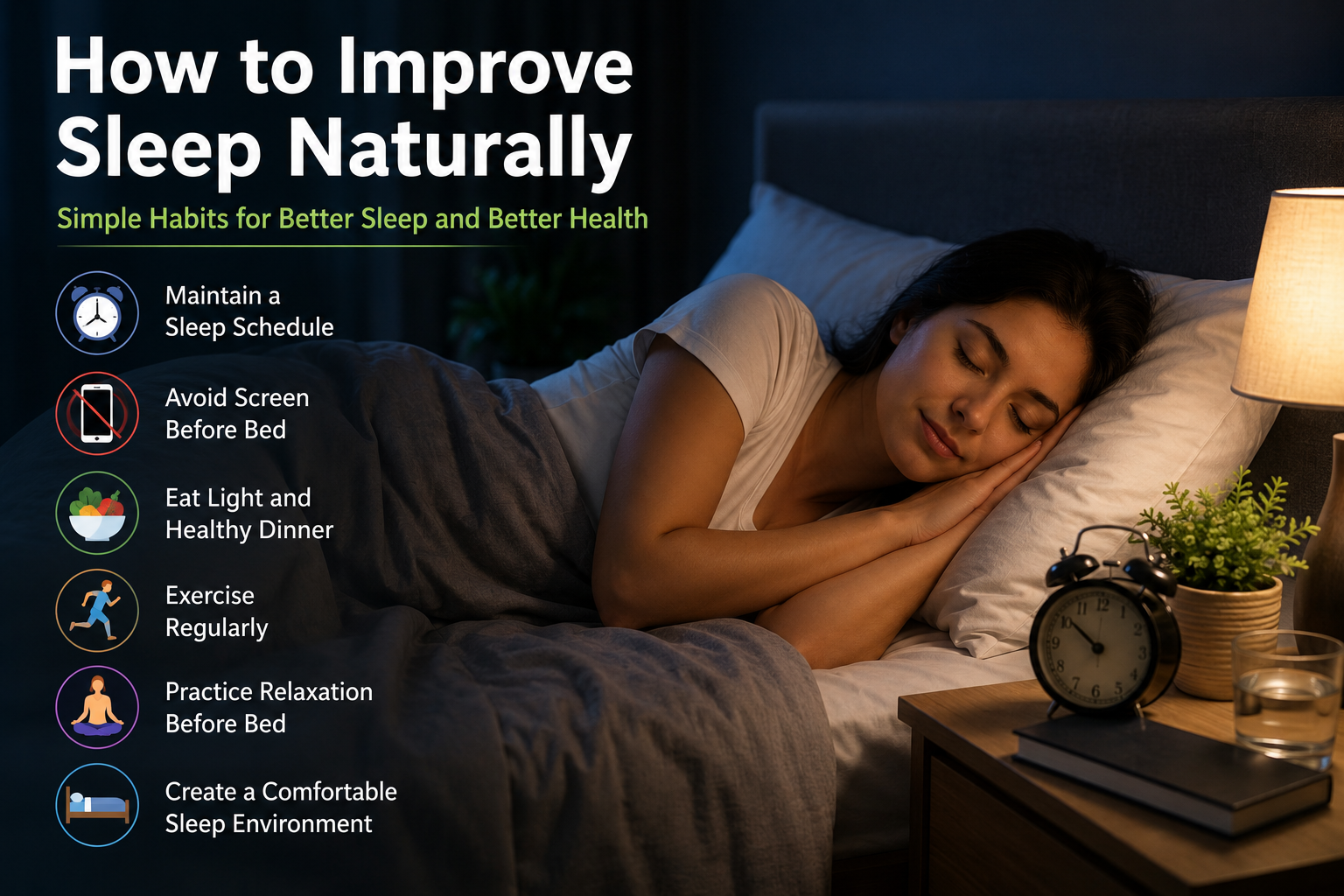
Sleep is one of the most important pillars of a healthy life, yet millions of people around the world struggle to get quality rest every night.
Modern lifestyles filled with:
- Stress
- Excess screen time
- Work pressure
- Poor eating habits
- Irregular schedules
- Anxiety
have made sleep problems increasingly common.
According to the Sleep Foundation, adults generally need around 7–9 hours of quality sleep for proper physical and mental functioning.
Unfortunately, many people:
- Sleep late
- Wake up tired
- Experience poor sleep quality
- Depend on caffeine to stay awake
- Feel mentally exhausted during the day
The good news is that sleep can often improve naturally through healthier daily habits and lifestyle changes.
In this complete guide, you’ll learn:
- How to improve sleep naturally
- Best foods for better sleep
- Evening habits that improve rest
- Natural remedies for sleep
- Best exercises for sleep improvement
- Common sleep mistakes to avoid
- Real-life examples and practical tips
This guide is designed for beginners who want realistic, sustainable, and healthy ways to sleep better naturally.
Why Sleep Is So Important
Sleep is not simply “rest.”
During sleep, the body and brain perform critical functions including:
- Physical recovery
- Muscle repair
- Hormone regulation
- Brain recovery
- Memory processing
- Emotional balance
Research from Harvard Medical School suggests that healthy sleep habits are strongly connected to physical health, mental wellness, focus, and productivity.
Poor sleep over time may affect:
- Mood
- Energy
- Weight
- Mental health
- Immune system
- Heart health
Sleep affects almost every part of life.
Signs You May Not Be Getting Enough Sleep
Many people underestimate poor sleep quality.
Common signs include:
- Feeling tired after waking up
- Difficulty focusing
- Mood swings
- Increased stress
- Frequent headaches
- Low motivation
- Dependence on caffeine
- Daytime sleepiness
1. Create a Consistent Sleep Schedule
One of the most powerful natural sleep improvements is consistency.
The body follows an internal clock called the circadian rhythm.
Irregular sleeping schedules confuse this natural rhythm.
What You Should Do
✅ Sleep at the same time daily
✅ Wake up consistently
✅ Maintain routine even on weekends
Real Example
A person sleeping at random times daily may struggle with fatigue, while someone maintaining a regular sleep schedule often experiences deeper and more refreshing sleep.
2. Reduce Screen Time Before Bed
Modern technology is one of the biggest sleep disruptors.
Phones, laptops, tablets, and televisions emit blue light that may interfere with melatonin production.
Melatonin is the hormone that helps regulate sleep.
Best Screen Habits for Better Sleep
✅ Stop using screens 30–60 minutes before bed
✅ Use night mode if necessary
✅ Avoid social media late at night
What to Avoid
❌ Watching stressful content before sleep
❌ Late-night scrolling
❌ Excess gaming before bedtime
3. Improve Your Bedroom Environment
Your sleeping environment directly affects sleep quality.
Ideal Sleep Environment
Best Conditions
✅ Cool temperature
✅ Dark room
✅ Comfortable mattress
✅ Quiet surroundings
Helpful Sleep Tools
- Blackout curtains
- Comfortable pillows
- White noise machines
- Soft lighting
Small environmental changes often make a major difference.
4. Avoid Heavy Meals Before Sleeping
Eating habits strongly affect sleep quality.
Heavy meals late at night may cause:
- Acid reflux
- Discomfort
- Poor digestion
- Disturbed sleep
Best Dinner Habits
✅ Eat lighter dinners
✅ Finish meals 2–3 hours before bed
Foods to Avoid at Night
❌ Fast food
❌ Fried foods
❌ Excess sugar
❌ Heavy spicy meals
Best Foods That May Support Better Sleep
Some foods contain nutrients linked to relaxation and sleep support.
Recommended Sleep-Friendly Foods
1. Bananas
Contain magnesium and potassium.
2. Almonds
Rich in healthy fats and magnesium.
3. Oats
Comforting and may support relaxation.
4. Herbal Tea
Chamomile tea is popular for nighttime relaxation.
5. Warm Milk
Traditionally used before bedtime.
5. Reduce Caffeine Intake
Caffeine can stay in the body for several hours.
Too much caffeine late in the day may affect:
- Falling asleep
- Sleep depth
- Sleep quality
Common Caffeine Sources
- Coffee
- Energy drinks
- Soda
- Strong tea
Healthy Caffeine Habit
Try limiting caffeine intake after afternoon hours.
6. Exercise Regularly
Physical activity may improve sleep quality naturally.
According to Centers for Disease Control and Prevention (CDC), regular exercise supports better physical and mental health.
Best Exercises for Better Sleep
Walking
One of the simplest and most effective options.
Yoga
Yoga may help relax the nervous system and reduce stress.
Stretching
Helps release body tension.
Light Strength Training
Supports overall physical wellness.
Best Time to Exercise
Morning or evening light exercise often works best.
Avoid extremely intense workouts immediately before bed.
7. Manage Stress and Anxiety Naturally
Stress is one of the biggest causes of poor sleep.
Mental overthinking keeps the brain active even at bedtime.
Natural Stress Reduction Techniques
Meditation
Meditation may help calm racing thoughts.
Deep Breathing
Slow breathing exercises can help relax the nervous system.
Journaling
Writing thoughts before sleep may reduce mental overload.
Reading
Reading calming books can help the mind slow down naturally.
Research Insight
Research from American Psychological Association highlights the connection between stress management and mental wellness.
8. Get Morning Sunlight Exposure
Natural sunlight helps regulate the body’s internal clock.
Morning sunlight exposure may help:
- Improve circadian rhythm
- Increase alertness
- Support nighttime sleep
Simple Tip
Spend:
- 10–20 minutes outdoors in natural daylight daily.
9. Avoid Naps That Are Too Long
Short naps can help energy.
However, long daytime naps may disturb nighttime sleep.
Healthy Nap Recommendation
✅ 20–30 minutes maximum
Avoid late evening naps.
10. Try Relaxation Techniques Before Bed
Relaxation routines help signal the brain that it is time to sleep.
Best Relaxation Activities
- Deep breathing
- Gentle stretching
- Meditation
- Soft music
- Warm shower
- Aromatherapy
11. Best Natural Drinks for Better Sleep
Chamomile Tea
Widely used for relaxation.
Warm Milk
Traditional bedtime drink.
Lavender Tea
Popular for calming effects.
Important Reminder
Avoid sugary beverages late at night.
12. Build a Healthy Night Routine
Good sleep starts before bedtime.
Example Night Routine
| Time | Activity |
|---|---|
| 8:00 PM | Light dinner |
| 9:00 PM | Reduce screen exposure |
| 9:30 PM | Herbal tea or reading |
| 10:00 PM | Meditation/stretching |
| 10:30 PM | Sleep |
Consistency matters more than perfection.
Real-Life Example of Natural Sleep Improvement
A busy office worker experiencing poor sleep started:
- Reducing late-night phone usage
- Walking daily
- Drinking less caffeine
- Practicing yoga before bed
Within several weeks, they noticed:
- Better sleep quality
- Improved mood
- Increased energy
- Better focus during work
Small lifestyle changes often create powerful results.
Common Sleep Mistakes to Avoid
❌ Sleeping with phone notifications on
❌ Excess caffeine late evening
❌ Heavy late-night meals
❌ Irregular sleep schedule
❌ Watching stressful content before bed
❌ Overthinking in bed
Natural Supplements Sometimes Used for Sleep
Some people use:
- Magnesium
- Herbal teas
- Melatonin supplements
However, supplements should be used carefully and preferably with professional guidance.
Healthy Lifestyle Habits That Improve Sleep
Good sleep works best with:
- Healthy nutrition
- Regular exercise
- Stress management
- Reduced screen time
- Consistent routines
Sleep is part of a complete healthy lifestyle.
Final Thoughts
Improving sleep naturally is not about finding a magic solution.
It is about building healthier daily habits consistently.
Start simple:
- Sleep at regular times
- Reduce screen exposure
- Exercise regularly
- Eat lighter dinners
- Manage stress naturally
Over time, these small improvements can completely transform:
- Energy levels
- Mental health
- Productivity
- Emotional wellness
- Overall quality of life
Because good sleep is one of the most powerful forms of self-care.