
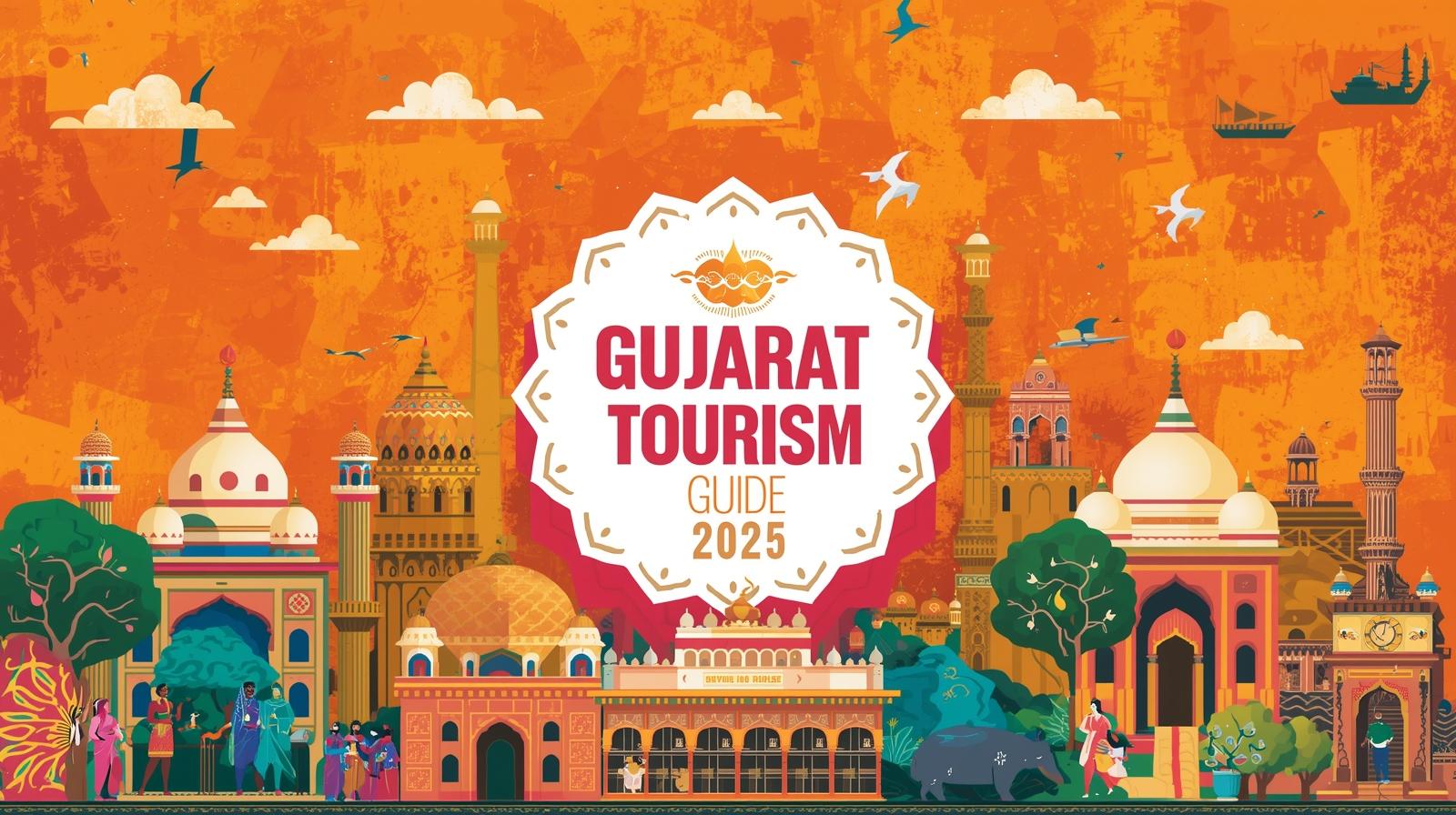
Gujarat Tourism Guide 2025: History, Culture, Famous Tourist Places & Travel Tips for International Visitors
Gujarat Tourism: A Scholarly Journey Through History, Heritage & Modern India
Gujarat is not merely a travel destination; it is a living civilization that bridges ancient Indian heritage with modern economic and political progress. Located on the western coast of India, Gujarat has been a cradle of trade, spirituality, architecture, and leadership for thousands of years. From the Indus Valley Civilization to contemporary India’s growth story, Gujarat stands as a state that has shaped the nation’s identity in multiple dimensions—cultural, political, and economic.
This detailed Gujarat tourism blog is written with academic depth, professional research, and a human narrative—designed for travelers, historians, and international tourists seeking authentic and safe travel experiences in India.
Formation of Gujarat State: Historical Background
The region of Gujarat has been inhabited since prehistoric times. Archaeological discoveries at Lothal, Dholavira, and Surkotada confirm Gujarat’s prominent role in the Indus Valley Civilization (c. 2600–1900 BCE), making it one of the oldest centers of urban planning and maritime trade in the world.
After independence, Gujarat was part of the bilingual Bombay State. Due to linguistic and cultural differences, a major political movement led to the formation of a separate Gujarati-speaking state. On 1st May 1960, Gujarat officially became an independent state of India, with Ahmedabad as its first capital (later shifted to Gandhinagar).
Kings, Dynasties & Political Evolution of Gujarat
Historically, Gujarat was ruled by powerful dynasties such as:
Mauryas (under Ashoka)
Gupta Empire
Solanki (Chaulukya) Dynasty – patrons of art, temples, and stepwells
Sultanate of Gujarat
Mughal Empire
Maratha Confederacy
British Colonial Rule
Post-independence, Gujarat emerged as a politically stable and economically progressive state, contributing visionary leaders to the nation.
Chief Ministers of Gujarat: Leadership & Governance
Below is a historically accurate and simplified list of Gujarat’s Chief Ministers, highlighting governance continuity and development focus:
Jivraj Narayan Mehta (1960–1963) – Foundation governance & state setup
Balwantrai Mehta (1963–1965) – Panchayati Raj reforms
Hitendra Desai (1965–1971) – Administrative strengthening
Madhavsinh Solanki (1980–1985, 1989–1990) – Social justice & KHAM strategy
Keshubhai Patel (1995–1998, 2001) – Rural development focus
Narendra Modi (2001–2014) – Infrastructure, tourism, global investment, governance reforms
Anandiben Patel (2014–2016) – Women empowerment & education
Vijay Rupani (2016–2021) – Industrial growth & digital governance
Bhupendra Patel (2021–Present) – Urban planning, ease of doing business, tourism expansion
Each administration played a vital role in shaping Gujarat into one of India’s most investor-friendly and tourist-friendly states.
Famous Tourist Places in Gujarat & Their History
1. Statue of Unity, Kevadia
The world’s tallest statue (182 meters), dedicated to Sardar Vallabhbhai Patel, symbolizes national unity. It is a global icon of modern India and a major attraction for international tourists.
2. Somnath Temple
One of the 12 Jyotirlingas of Lord Shiva, Somnath has been rebuilt several times after invasions, standing today as a symbol of resilience, faith, and Indian spiritual heritage.
3. Dwarkadhish Temple, Dwarka
Believed to be the ancient kingdom of Lord Krishna, Dwarka is one of the Char Dham pilgrimage sites and holds immense mythological and archaeological importance.
4. Rann of Kutch
A vast white salt desert, famous for the Rann Utsav, showcasing Gujarati culture, handicrafts, folk music, and desert landscapes unlike anywhere else in the world.
5. Gir National Park
The only natural habitat of the Asiatic Lion, Gir represents Gujarat’s success in wildlife conservation and eco-tourism.
6. Sabarmati Ashram, Ahmedabad
Once home to Mahatma Gandhi, this ashram played a crucial role in India’s freedom struggle and offers deep insight into Gandhian philosophy.
7. Champaner–Pavagadh Archaeological Park (UNESCO Site)
An extraordinary blend of Hindu and Islamic architecture, reflecting medieval Gujarat’s cultural harmony.
8. Modhera Sun Temple
Built in the 11th century by the Solanki dynasty, this temple is an architectural marvel dedicated to the Sun God.
Gujarat Tourism for International Travelers: Why Choose Dave Travels
For foreign tourists planning a trip to Gujarat or India, travel safety, visa support, and local expertise are essential. This is where Dave Travels becomes a trusted partner.
Why International Tourists Should Contact Dave Travels Before Visiting India:
Complete Visa Assistance & Documentation
Flight, Train & Hotel Booking under one platform
Affordable and customizable India Tour Packages
Dedicated Travel Manager for personalized support
Strong focus on Cyber Crime Awareness to protect tourists from fraud
Data safety, secure transactions, and local compliance guidance
Dave Travels goes beyond bookings—it ensures international tourists feel safe, informed, and cared for throughout their Indian journey.
Cyber Safety & Tourist Protection in India
With increasing digital transactions, Dave Travels actively educates its international clients about:
Avoiding online travel fraud
Safe digital payments in India
Protecting personal data
Identifying fake tour operators and cyber scams
This proactive approach makes Dave Travels a responsible and future-ready travel partner.
Contact Person: Sunil Dave
Contact Details : +91 9224621626 / +91 9076201626
Conclusion: Why Gujarat Should Be on Every Traveler’s List
Gujarat is a state where ancient civilization meets modern development, where spirituality coexists with industrial growth, and where tradition harmonizes with technology. Whether you are a history enthusiast, spiritual seeker, wildlife lover, or global traveler, Gujarat offers a deeply enriching experience.
For international visitors, planning your journey with Dave Travels ensures not just comfort and affordability—but safety, authenticity, and peace of mind.
Gujarat is not just visited—it is understood, experienced, and remembered.
1. FAQs for Gujarat Tourism
Frequently Asked Questions About Gujarat Tourism
Q1. Why is Gujarat famous among tourists?
Gujarat is famous for its rich cultural heritage, ancient temples, wildlife sanctuaries, architectural wonders, and vibrant festivals. From the Statue of Unity and Rann of Kutch to Somnath and Dwarka, Gujarat offers a perfect blend of history, spirituality, and modern tourism infrastructure.
Q2. What is the best time to visit Gujarat?
The best time to visit Gujarat is between October and March, when the weather is pleasant and ideal for sightseeing, wildlife safaris, desert festivals, and cultural tours. This period also includes popular events like the Rann Utsav.
Q3. Is Gujarat safe for international tourists?
Yes, Gujarat is considered one of the safest states in India for international travelers. With well-developed cities, good law enforcement, and reliable transport systems, tourists feel secure. However, it is recommended to travel through trusted agencies like Dave Travels, which also provide cyber crime awareness and secure travel support.
Q4. What are the must-visit tourist places in Gujarat?
Some must-visit places include the Statue of Unity, Gir National Park, Rann of Kutch, Somnath Temple, Dwarkadhish Temple, Sabarmati Ashram, Modhera Sun Temple, and Champaner-Pavagadh UNESCO World Heritage Site.