
Top Cyber Crimes in 2025: How Hackers Are Targeting You Right Now
🔍 Introduction: Cyber Crime Is Evolving Faster Than Ever
In 2025, cyber crime has evolved faster than any other form of criminal activity, becoming a global threat that impacts individuals, businesses, and governments on a massive scale. With the rise of AI-powered hacking tools, automated cyber attacks, and sophisticated online fraud techniques, criminals no longer need advanced skills — technology is doing the work for them. Every second, millions of devices are scanned by hackers looking for weaknesses in passwords, Wi-Fi networks, banking apps, and social media accounts. As a result, cyber crimes like phishing attacks, ransomware, identity theft, and dark web data trading have reached their highest levels in history.
What makes 2025 especially dangerous is that cyber criminals are using artificial intelligence to create undetectable phishing emails, deepfake videos, and real-time scam messages that look 100% authentic. Whether you are browsing the internet, shopping online, or simply using your smartphone, you are already a target for hackers without even realizing it. This is why understanding today’s cyber threats is no longer optional — it is essential for survival in the digital world. In this blog, we uncover the top cyber crimes happening right now, how hackers execute their attacks, and what you can do to protect your data, money, and identity before it’s too late.
1️⃣ AI-Powered Phishing Attacks (Most Common in 2025)
In 2025, AI-powered phishing attacks have become the most widespread and dangerous cyber threats on the internet. Traditional phishing was easier to detect, but modern criminals are now using Artificial Intelligence, machine learning algorithms, and automated email generators to create phishing messages that look 100% legitimate. These advanced attacks, known as AI phishing or smart phishing scams, can perfectly mimic the tone, design, and communication style of banks, payment services, government bodies, e-commerce platforms, and even family members. Hackers use AI bots to analyze your email behavior, social media activity, shopping patterns, and search history to craft ultra-personalized messages that trick even tech-savvy users into clicking harmful links. These messages often appear as urgent payment alerts, OTP verification emails, refund notifications, or account suspension warnings, making millions of users fall victim every day.
What makes AI phishing so dangerous is its ability to generate real-time fake websites, identical to official login pages of popular platforms like Gmail, Facebook, Netflix, PayPal, and banking apps. The moment a user enters their password, the details are instantly captured and sold on the dark web or used for identity theft, bank fraud, and unauthorized transactions. In many cases, AI-driven phishing tools automatically bypass spam filters, making these attacks almost undetectable. The global rise in crypto scams, business email compromise (BEC), and mobile phishing (Smishing) is also directly linked to the use of artificial intelligence by cyber criminals.
Phishing has existed for years, but 2025 phishing is extremely dangerous because hackers use AI to create perfect emails, messages, and websites.
🚨 How Hackers Target You:
They send emails that look 100% real (bank, PayPal, Amazon, government notices).
WhatsApp/Instagram messages with “urgent” links.
Fake OTP alerts and fake payment failure messages.
🎯 What Hackers Steal:
Passwords
Bank details
Credit card information
Social media accounts
🛡 How to Protect:
Never click unknown links.
Always check sender email ID.
Enable 2-Step Verification on all accounts.
To stay safe in 2025, users must adopt strong cybersecurity habits like two-factor authentication, password rotation, domain checking, and avoiding impulsive clicks on unknown links. As AI continues to advance, phishing attacks will only become more intelligent — making cyber awareness, digital safety education, and real-time threat monitoring more important than ever.
2️⃣ Ransomware Attacks on Mobile & PC
In 2025, ransomware attacks on mobile phones and PCs have exploded globally, becoming one of the most destructive types of cyber crimes targeting both individuals and businesses. Unlike normal viruses, ransomware is a sophisticated malware that locks your device, encrypts all files, and demands a hefty ransom payment to restore access. Cyber criminals use AI-driven tools to scan millions of devices daily, looking for weak passwords, outdated software, insecure Wi-Fi networks, and unprotected phones. Once ransomware enters a device — often through fake apps, malicious email attachments, pirated software, or phishing links — it takes only seconds for the system to become fully compromised. The victim then receives a warning message claiming all files (photos, documents, banking details, chats, business data) have been encrypted and will be permanently deleted unless payment is made—usually in Bitcoin or cryptocurrency to avoid tracking.
What makes ransomware especially dangerous in 2025 is that hackers now target mobile devices with the same intensity as PCs. Mobile ransomware spreads through APK malware, fake payment apps, fraudulent SMS links (smishing), and cloned versions of popular apps. For businesses, ransomware has caused multi-million-dollar losses, data breaches, shutdowns, and huge operational damage. Attackers use modern techniques like double extortion, where they not only encrypt your data but also threaten to leak it publicly on the dark web if the ransom is not paid. This puts organizations under immense pressure to pay huge amounts to prevent reputational damage, legal troubles, and customer data exposure.
Ransomware is one of the world’s fastest-growing cyber crimes in 2025. Hackers lock your device and demand money to unlock it.
🚨 How Hackers Target:
Fake APK downloads
Cracked software
Unknown USB devices
Email attachments (PDF, DOCX, ZIP)
🎯 Who Is at Risk?
Small businesses
Hospitals
Students
Employees working from home
🛡 Protection Tips:
Don’t download pirated software.
Keep backups on cloud.
Use updated antivirus.
Preventing ransomware requires strong cybersecurity practices. Users must avoid installing third-party apps, stop downloading cracked software, regularly update their operating system, and back up important data to cloud storage. Businesses should invest in endpoint protection, network security, and employee cybersecurity training, as a single wrong click can compromise an entire organization. In a digital world where hackers innovate every day, staying aware and adopting strong security measures is the only defense against the rapidly evolving threat of ransomware.
3️⃣ Identity Theft Through Data Breaches
In 2025, identity theft through data breaches has become one of the most dangerous and rapidly increasing cyber crimes worldwide, affecting millions of users every month. A data breach occurs when hackers break into a company’s database and steal sensitive information such as names, emails, passwords, phone numbers, banking details, Aadhaar/SSN numbers, and even biometric data. This stolen information is then sold on the Dark Web, where cyber criminals purchase identities to commit fraud under someone else’s name. Identity theft has become so advanced that hackers can now open fake bank accounts, apply for loans, purchase SIM cards, conduct online fraud, and even take over someone’s digital life without the victim ever realizing it. With so many organizations — banks, hospitals, e-commerce platforms, fintech apps, and social media companies — suffering massive breaches, no one is truly safe anymore.
The biggest problem with identity theft is that victims usually discover the fraud months after the breach, when their credit score drops, unauthorized transactions appear, or legal notices arrive for actions they never committed. Cyber criminals use AI-powered tools to automatically sort stolen data, match identity patterns, and create new fraudulent digital identities with extreme accuracy. This makes identity theft nearly impossible to detect without strong cybersecurity monitoring. In many cases, hackers combine breached data with phishing attacks and social engineering tactics to take control of email accounts, social media profiles, and cloud storage, leading to complete digital identity takeover. Once your personal information is exposed, it can circulate on dark web markets for years, making long-term protection essential.

Almost every month, large companies face data breaches that expose names, emails, passwords, phone numbers — sometimes even Aadhaar or SSN.
🚨 Hackers Use Your Data To:
Open fake bank accounts
Take loans
Commit fraud using your identity
Sell your data on the Dark Web
🛡 Protection:
Change passwords every 90 days.
Don’t use the same password everywhere.
Check if your email is leaked using “Have I Been Pwned” tool.
To safeguard yourself from identity theft, it is crucial to use unique passwords, enable multi-factor authentication, monitor financial statements regularly, and check if your email or phone number is leaked using breach detection tools. Companies must invest in advanced encryption, data loss prevention, and cybersecurity audits to protect customer data. In a world where data is more valuable than money, staying aware of identity theft and securing your digital footprint is the strongest defense against this silent cyber threat.
4️⃣ Social Media Hacking (Instagram, Facebook, WhatsApp)
In 2025, social media hacking has become one of the fastest-growing cyber threats, especially as billions of users rely on platforms like Instagram, Facebook, WhatsApp, Snapchat, and Telegram for communication, business, and daily life. Hackers now use AI-powered social engineering, phishing messages, and fake verification alerts to break into accounts within minutes. The most common attack involves fake login pages that look identical to official websites, tricking users into entering their passwords. Once the attacker gains access, they can steal personal photos, impersonate victims, demand money from contacts, or even lock the user out permanently. Instagram influencers, small business owners, and teenagers are among the top targets because their accounts hold high engagement and personal value — making them easier to exploit.
Another rising form of social media hacking is WhatsApp hijacking, where criminals use SIM swapping, OTP scams, or WhatsApp Web cloning to take over accounts without needing the victim’s phone. Hackers send messages pretending to be customer support, brand representatives, or even friends, asking for a “verification code.” The moment the victim shares the OTP, their WhatsApp account is instantly taken. These compromised accounts are often used for fraud, blackmail, crypto scams, and mass phishing attacks. Facebook pages and business profiles are also frequently targeted because they contain payment data, advertising access, and customer information, making them extremely valuable to cyber criminals.
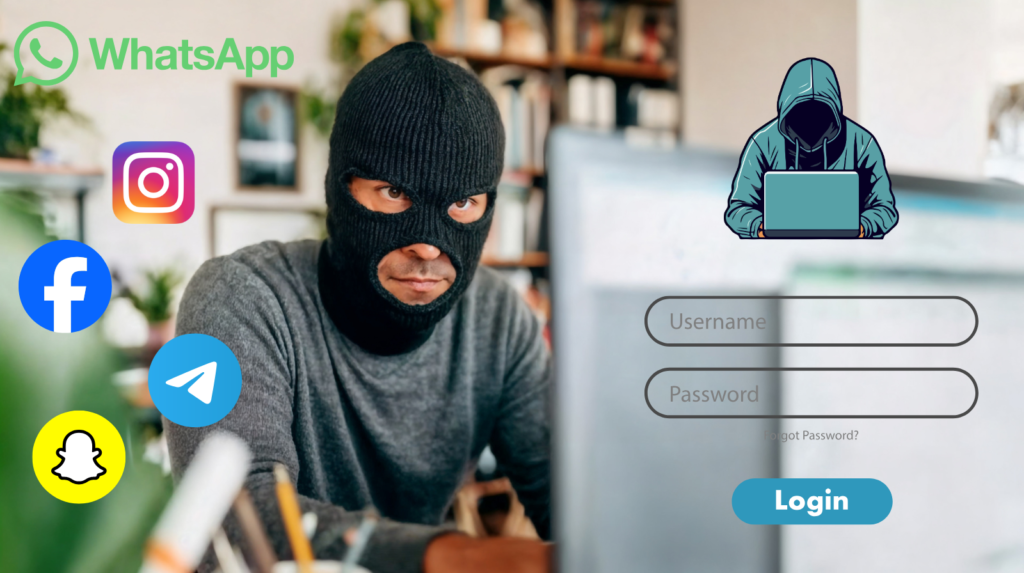
2025 sees a huge rise in account takeover scams.
🚨 How Hackers Hack:
Fake login pages
Suspicious “verification” messages
Fake collaboration messages for influencers
OTP scams
🎯 What Hackers Do With Accounts:
Blackmail
Impersonation
Fraud through your account
🛡 Stay Safe:
Never share OTP
Enable two-factor authentication
Avoid using public Wi-Fi for login
To protect yourself from social media hacking, it is essential to enable Two-Factor Authentication (2FA), avoid clicking unknown links, log out from shared devices, and never share OTP or login codes with anyone — even if the message appears trusted. Users should also regularly check active sessions on their accounts, report suspicious activities, and use strong, unique passwords for each platform. As cyber criminals become smarter with AI and automation, staying alert and practicing cyber hygiene is the only way to safeguard your online identity on social media in 2025.
5️⃣ Online Shopping Scams & Fake E-Commerce Sites
In 2025, online shopping scams and fake e-commerce websites have become one of the most common and financially damaging cyber crimes worldwide. With millions of people buying products online every day, cyber criminals are creating professional-looking fake websites, cloned e-commerce stores, and fraudulent social media shops that appear completely legitimate. These scam sites use heavy discounts, “Flash Sale 80% OFF,” “Buy 1 Get 2 Free,” and “Limited Stock – Order Now” tactics to attract unsuspecting shoppers searching for the best deals. The moment a user enters their credit card details, UPI information, address, or phone number, the scammers capture the data and immediately disappear. Victims either receive cheap counterfeit products, empty parcels, or more commonly — nothing at all. This leads to financial loss, identity exposure, and long-term risks of further online fraud.
What makes online shopping scams so dangerous in 2025 is that fake websites now use advanced AI design tools, convincing customer reviews, fake delivery partners, and high-quality product images to appear 100% trustworthy. These scam sites run targeted ads on Instagram, Facebook, TikTok, and Google, making them easily accessible to millions. Many users fall for fake tracking numbers, fraudulent customer support chats, and cloned pages of reputable brands like Amazon, Flipkart, Myntra, Shein, and Nike. Some hackers also create fake mobile shopping apps that steal data the moment they are installed. Once payments are made, scammers either block the user or shut down the website, only to reopen it later with a new name and domain.

Thousands of fake websites appear every month, offering:
💥 “70% OFF Limited Offer”
💥 “Buy Now, Get Free Gift”
🚨 Hackers Steal:
Debit/credit card data
Payment information
Personal details for identity theft
🛡 Safety Tips:
Buy only from trusted websites
Check for HTTPS & lock icon
Avoid deals that look “too good to be true”
To protect yourself from online shopping scams, always verify websites by checking the URL, HTTPS security lock, customer reviews, and the company’s contact details. Avoid deals that appear “too good to be true,” as they usually are. Use Cash on Delivery (COD) when possible, avoid sharing sensitive banking details on new platforms, and never buy from ads that redirect to unknown domains. With fake e-commerce scams increasing every day, staying alert and double-checking every online purchase is the key to safe digital shopping in 2025.
6️⃣ Crypto & Investment Frauds
In 2025, crypto and online investment frauds have become some of the most widespread and financially devastating cyber crimes happening across the world. With the rising popularity of Bitcoin, Ethereum, NFTs, DeFi platforms, and AI trading bots, scammers have found the perfect opportunity to trap investors—especially beginners who chase quick profits. Cyber criminals now create fake crypto exchanges, scam investment apps, rug-pull tokens, and Ponzi schemes that promise unrealistic returns like “Earn 20% every day,” “Double your money in one week,” or “Guaranteed profit through AI trading bots.” These platforms look highly professional, showing fake dashboards, manipulated charts, and fabricated testimonials that convince users to deposit money. Once enough funds are collected, scammers disappear overnight, shut down the website, or block withdrawals—leaving investors with zero recovery.
One of the most dangerous trends in 2025 is the rise of deepfake investment scams, where AI-generated videos and voices of celebrities, CEOs, and financial experts are used to promote fraudulent crypto schemes. This makes scams appear authentic and trustworthy, tricking even experienced traders. Criminals also hack verified social media accounts and post “investment giveaways,” leading thousands of followers to deposit money into scam wallets. Fake customer support numbers and Telegram groups further mislead users into sharing their private keys, seed phrases, or wallet passwords, giving hackers full control over their crypto holdings. Since blockchain transactions are irreversible, victims cannot recover stolen funds, making crypto fraud one of the hardest cyber crimes to fight.

Crypto-related crimes increased globally in 2025.
🚨 Common Scams:
Fake investment apps
Fake influencers promising high returns
AI bot trading scams
Rug pulls in new crypto tokens
🛡 Protection:
Invest only through verified exchanges
Beware of unrealistic profit claims
Never send crypto to unknown wallets
To protect yourself from crypto and investment fraud, always use official exchanges, verify websites before investing, and avoid schemes that promise guaranteed profits—because no real investment guarantees returns. Never share your private key, seed phrase, or wallet login details with anyone, no matter how legitimate they appear. Research every token, app, or trading bot before investing, and rely on trusted financial sources, not viral ads or random influencers. As cyber criminals continue exploiting the booming digital finance industry, staying cautious and well-informed is the only way to avoid becoming a victim of crypto fraud in 2025.
7️⃣ Deepfake Scams (New & Terrifying Trend)
In 2025, deepfake scams have become one of the most terrifying and rapidly growing cyber threats, powered by advanced AI tools that can create ultra-realistic fake videos, voices, and images within minutes. Deepfakes use AI-generated facial mapping, voice cloning, and synthetic media technology to produce content that looks 100% real, making it almost impossible for the average user to detect the difference. Cyber criminals are now using deepfakes to conduct financial fraud, identity theft, blackmail, corporate scams, and even political manipulation. One of the most common attacks involves scammers creating a deepfake video call or voice note of a family member, friend, or company executive asking for urgent money transfers, OTP verification, or confidential information. Victims often believe the request is real—because the voice and face match perfectly.
Deepfake technology is also being used to impersonate celebrities, government officials, and top CEOs to promote fake investment schemes, crypto frauds, and phishing campaigns on social media. Businesses are facing an alarming rise in deepfake business email compromise (BEC), where hackers clone the CEO’s voice and instruct employees to transfer large funds instantly. On the personal safety side, criminals are misusing deepfake videos for character assassination, reputation damage, and emotional blackmail, causing severe mental and financial harm. These AI-driven scams spread rapidly on WhatsApp, Instagram, Telegram, and other platforms, making deepfakes one of the hardest cyber crimes to detect and control.
Hackers now use AI to create deepfake videos and audio.
🚨 Used For:
Blackmail
Fake phone calls requesting money
Political manipulation
Scam calls pretending to be relatives
🛡 Stay Safe:
Verify voice/video before sending money
Use deepfake detection tools